How Request Service matches homeowners with local professionals
Professional, trustworthy, friendly, and accessible. The article explains Request Service's published homeowner workflow without promising that a particular number of contractors will respond or that every advertised platform feature is live.
Request Service Editorial
Editorial Team

Finding the right contractor shouldn't require hours of searching, repeated phone calls, and guessing which company will actually show up.
Whether you're dealing with a leaking pipe, a broken air conditioner, or planning a bathroom renovation, you want someone who understands the job, serves your neighborhood, and can explain the cost before work begins.
That's why Request Service matches homeowners with local professionals based on the service they need and the area where the work will take place.
Through RequestService.com, homeowners can explore home service categories, describe their projects, and request written estimates from relevant local companies.
The idea is simple: make it easier to move from identifying a home problem to choosing a professional, with clear information at every step.
Here's how the matching process works, what you should expect from a contractor, and how to compare your options before hiring.
How Request Service Matches Homeowners With Local Professionals
Request Service is a home services marketplace designed to connect homeowners with businesses that offer the specific services they need in their geographic area.
Instead of relying solely on a general internet search, you can start with two important details: what work needs to be done and where your home is located.
The platform's matching approach focuses on service categories and ZIP Code coverage.
For example, if you live in Denver, Colorado, and need a water heater installed, your request should be directed toward plumbing professionals who offer that service and cover your ZIP Code.
A contractor specializing in roof replacement wouldn't be a relevant match, nor would a plumber serving an entirely different region.
The platform is designed to narrow those possibilities before you spend time contacting businesses.
Once a request reaches relevant professionals, they can review the project details and decide whether to respond with an estimate or request additional information.
Matching identifies potentially suitable businesses. It does not guarantee that every company will be available, qualified for your particular job, or willing to provide a quote.
How the Homeowner Matching Process Works: 7 Steps
Step 1: Choose the Home Service You Need
Every successful project begins with identifying the work correctly.
Request Service organizes residential services into categories such as plumbing, electrical, HVAC, roofing, painting, landscaping, handyman services, house cleaning, bathroom remodeling, and pest control.
You can browse a category or begin with a more specific project.
For instance, plumbing work might involve a clogged drain, a leaking water heater, faucet replacement, or a sewer line problem.
The distinction matters because not every business handles every type of job within its trade.
A plumbing company that specializes in remodeling may not offer emergency drain cleaning. Likewise, some HVAC contractors focus on installations rather than urgent repairs.
Selecting the closest available category helps make the initial request more relevant.
Step 2: Enter Your ZIP Code
A business's service area matters almost as much as its specialty.
Request Service uses ZIP Code information to help identify professionals that cover the homeowner's location.
Consider the Denver metropolitan area. A contractor based in Aurora might regularly serve Centennial and Parker but not accept jobs farther north.
Another company may operate throughout the metro area.
By including your ZIP Code, you give the platform a geographic starting point for identifying relevant businesses.
You may also browse home service professionals by city when exploring available locations.
Homeowner tip: Use the ZIP Code of the property where the work will be performed, particularly if it's a rental home or a property you're preparing to sell.
Step 3: Describe Your Project
A clear project description can make a substantial difference in the quality of a contractor's response.
Compare these two requests:
Basic request: "My water heater isn't working."
More useful request: "Our 50-gallon gas water heater is about 11 years old. It heats water inconsistently, and we're considering replacement. The unit is in the basement, and we'd like an estimate for a similar model."
The second request provides information that helps a plumber understand the equipment, location, and homeowner's objective.
When describing your project, include relevant symptoms, equipment specifications, property access details, and preferred scheduling.
Photos can also help a professional assess visible damage or identify equipment, where image attachments are supported.
However, some problems require an onsite inspection before an accurate estimate is possible.
Hidden plumbing leaks, electrical faults, and structural damage are common examples.
Step 4: Connect With Local Home Service Professionals
After you submit your request, Request Service's matching workflow is designed to direct it to participating companies whose trades and service areas correspond with your needs.
The platform also provides a way to explore individual company profiles.
This gives homeowners two possible approaches:
Open request: Describe your project and allow relevant local companies to review it.
Direct company selection: Choose a particular professional from the available listings and send the request to that company.
Both approaches have advantages.
An open request can help homeowners discover businesses they may not already know.
Direct selection makes sense when you've identified a company whose services or qualifications interest you.
Keep in mind that a match does not represent a completed background check or endorsement of workmanship. Always evaluate the professional before hiring.
Step 5: Request and Compare Written Estimates
Price is important, but the cheapest quote isn't always the best deal.
Request Service emphasizes written estimates that identify the work being proposed and the associated charges.
A useful estimate should explain the labor, materials, equipment, exclusions, and applicable terms.
Imagine you're replacing a water heater and receive the following proposals:
| Estimate Detail | Plumber A | Plumber B |
|---|---|---|
| Total quoted price | $1,450 | $1,700 |
| Equipment model specified | Yes | Yes |
| Old heater removal | Included | Included |
| Permit | Not included | Included |
| New expansion tank | Additional cost | Included |
| Workmanship warranty | 1 year | 2 years |
Illustrative example only, not actual quotes obtained through Request Service.
At first glance, Plumber A looks less expensive.
But after accounting for a permit and expansion tank, the difference could narrow or disappear.
This is why comparing itemized estimates matters.
Before making your decision, ask each contractor to clarify what the price includes and what could trigger an additional charge.
Step 6: Review and Approve the Work
Once you've selected a contractor, the proposed work should be documented in an agreement.
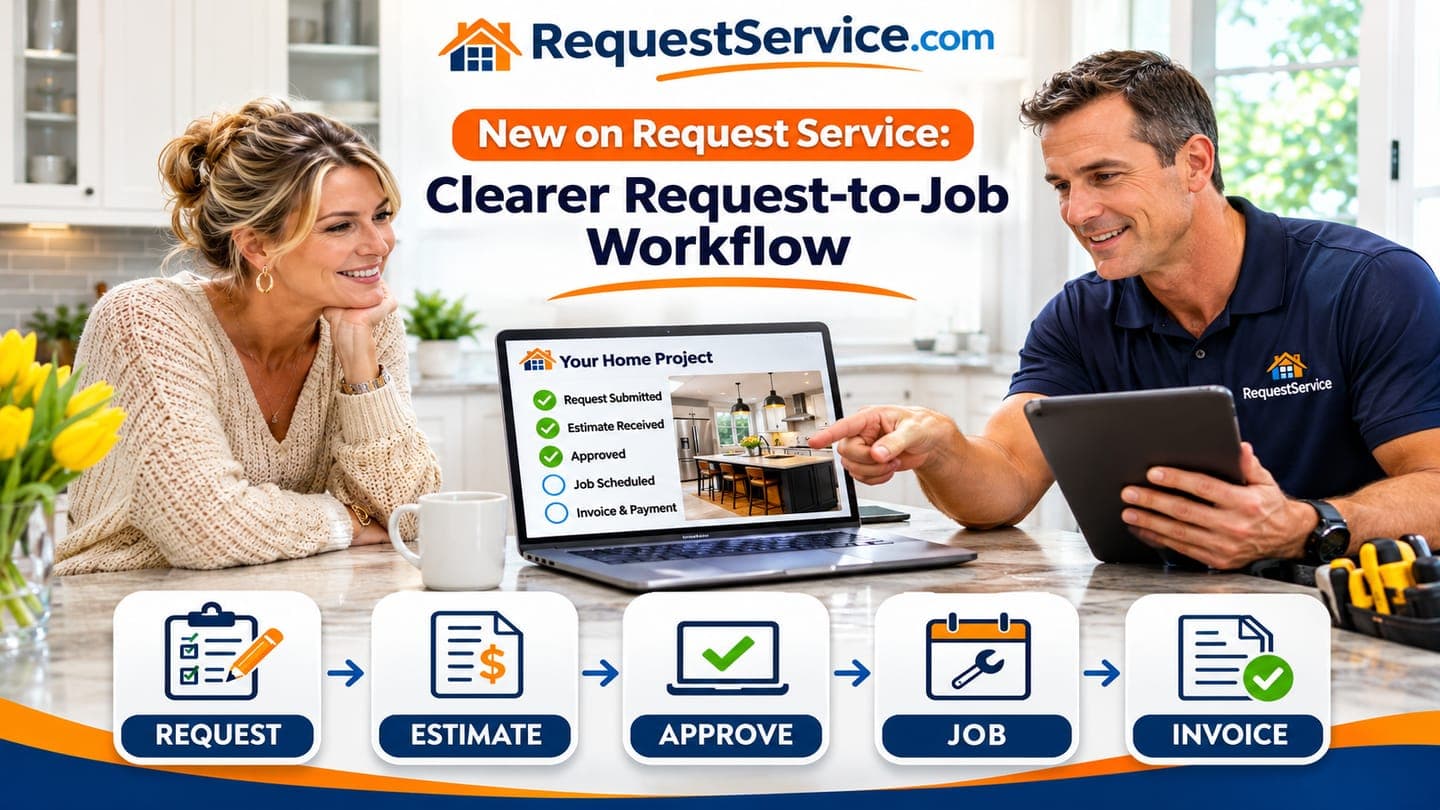
Request Service's published workflow includes digital estimate approval and preserving the original approved scope as the basis for the job record.
This is particularly useful for larger projects involving materials, scheduling, multiple stages, or progress payments.
Consider a bathroom remodel.
The written agreement might specify tile selections, shower waterproofing, fixture installation, demolition, debris removal, and permit responsibilities.
If the homeowner later decides to add a recessed shower niche or upgrade plumbing fixtures, those changes should be documented and priced separately before the additional work begins.
A clear written scope helps both parties understand what has been approved.
Step 7: Complete the Project and Review the Invoice
Hiring a contractor is only one part of managing a home improvement project.
Appointments, changes, invoices, and payments also require attention.
Request Service describes a workflow where the approved estimate carries forward into the job record and related invoice.
That continuity can help homeowners understand how the final charges relate to the work they originally approved.
Before making a final payment, review the completed work, confirm any approved changes, and retain copies of applicable warranties and receipts.
Why Matching by Service and Location Matters
Not every home service professional is suitable for every job.
A contractor may have an excellent reputation but lack experience with your particular project.
Another may perform the work regularly but operate outside your service area.
Matching by trade and geography helps eliminate some unsuitable possibilities before homeowners invest time arranging appointments.
Better Alignment With Your Project
A homeowner who needs electrical panel replacement should be directed toward electrical contractors rather than businesses offering only general household maintenance.
Matching by service category provides a more relevant starting point.
More Practical Local Scheduling
Professionals already serving your community may be better positioned to arrange site visits and follow-up appointments.
Availability still depends on each company's workload and schedule.
Familiarity With Local Requirements
Permits, licensing rules, and inspection procedures vary by location.
A contractor who works regularly in your municipality may be familiar with relevant processes, but homeowners should still confirm the business holds the required credentials.
Easier Comparison of Options
Finding several potentially relevant companies lets you evaluate their expertise, communication, proposed scope, and pricing.
The objective isn't to collect the most names. It's to identify suitable professionals worth considering.
What Makes Request Service Different From a Traditional Contractor Directory?
A traditional directory primarily helps you locate business information.
Request Service is built around a broader process: discovery, request submission, written estimates, project approval, and job documentation.
| Feature | Traditional Business Directory | Request Service's Published Workflow |
|---|---|---|
| Find service providers | Browse businesses | Browse by trade and location |
| Describe your project | Usually contact each company separately | Submit service request details |
| Find relevant companies | Search listings and service areas manually | Match by trade and ZIP Code |
| Compare written estimates | Often separate emails or documents | Itemized estimate workflow |
| Approve project scope | Usually handled outside the directory | Digital approval workflow |
| Track project information | May require separate systems | Connected job record |
| Review invoices | Usually managed with each contractor | Invoice linked to job workflow |
These are differences in the platforms' general approach. Individual directories and contractor marketplaces may offer additional features.
The meaningful distinction is the effort to connect the hiring decision with the project documentation that follows.
For homeowners, this can reduce the need to piece together details from unrelated emails, text messages, and documents.
What Home Services Can You Find Through Request Service?
Request Service lists a range of residential service categories.
Plumbing Services
Find companies offering water heater installation, leak repairs, drain cleaning, fixture replacement, and related plumbing work.
HVAC Services
Search for professionals handling heating and cooling repairs, equipment maintenance, furnace replacement, and air conditioning installation.
Electrical Services
Explore companies offering lighting installation, outlet repairs, electrical upgrades, and other residential electrical work.
Roofing Services
Find contractors for roof inspections, repairs, and roof replacement projects.
Bathroom Remodeling
Search for professionals who provide shower renovations, bathtub installation, tile work, and full bathroom remodeling.
Other Residential Services
Additional categories include handyman work, painting, landscaping, house cleaning, and pest control.
Availability depends on whether suitable participating businesses serve your location.
How to Choose a Reliable Professional After Being Matched
Being connected with a company is the beginning of your evaluation, not the end.
Before hiring, take a few minutes to review the details that matter most.
Verify Licensing and Insurance
Ask whether licensing is required for your particular project.
Check active credentials with the appropriate licensing authority when applicable.
Request evidence of insurance, especially for work involving significant property risk.
Look for Relevant Experience
A contractor who regularly completes projects like yours may be better equipped to identify complications and explain the scope.
For larger projects, ask about comparable completed jobs and available references.
Evaluate the Estimate
Make sure you understand what is included, what is excluded, and how unexpected work will be handled.
Avoid relying on vague descriptions such as "complete bathroom renovation" without a more detailed breakdown.
Review the Payment Schedule
For larger projects, payments may be tied to agreed milestones.
Clarify deposits, progress payments, and final payment conditions before signing.
Pay Attention to Communication
Professional communication matters.
Does the company answer your questions clearly? Can it explain why a particular repair or product is recommended?
You should feel comfortable asking for clarification before committing to the work.
Example: Finding a Bathroom Remodeling Contractor
Suppose a homeowner in Aurora, Colorado, wants to replace an outdated bathtub with a walk-in shower.
The project may involve demolition, plumbing modifications, waterproofing, tile installation, and glass enclosure work.
Here's how the homeowner could approach the process through Request Service.
First, select bathroom remodeling and provide the property's ZIP Code.
Next, describe the existing bathroom and explain the desired improvements.
A useful description might mention the shower dimensions, tile preferences, plumbing changes, and preferred project timeframe.
Relevant local remodeling companies can then review the request through the platform's intended matching process.
The homeowner can compare any estimates received, paying attention to waterproofing methods, materials, labor, permit responsibilities, and warranty terms.
Finally, the homeowner can choose a suitable contractor and confirm the scope before work begins.
The result is a more organized way to approach the decision, rather than relying on a single price or brief phone conversation.
What Homeowners Should Know Before Requesting a Quote
A few simple preparations can help you get more useful responses.
Be realistic about your budget. If you have a target price range, communicate it, especially for remodeling projects where materials and design decisions affect the cost.
Distinguish urgent repairs from planned improvements. A leaking supply line needs a different response than a bathroom renovation planned for next spring.
Explain access limitations. Tight mechanical rooms, basement equipment, parking restrictions, and occupied rental properties can affect scheduling and installation.
Ask for comparable proposals. Contractors may recommend different solutions. Make sure you understand why before choosing.
Don't confuse an initial estimate with a guaranteed final price. Some problems cannot be fully assessed until a professional visits the property.
The better your project information, the more productive the conversation is likely to be.
Key Takeaways
Request Service is designed to simplify how homeowners find and evaluate local home service companies.
Its matching process begins with the type of work needed and the ZIP Code where the project is located.
From there, the platform's published workflow connects service discovery with project requests, written estimates, approvals, and job documentation.
Homeowners remain responsible for evaluating contractor qualifications, comparing the actual scope of work, and making the final hiring decision.
The biggest benefit isn't simply finding another contractor. It's having a clearer path from describing your project to deciding who should complete it.
Frequently Asked Questions
1. How does Request Service match homeowners with local professionals?
Request Service uses the homeowner's selected service category and ZIP Code to identify participating businesses that offer the relevant trade and serve the requested area. Those professionals can review project information and respond with estimates or follow-up questions.
2. Do I have to hire a contractor after requesting a quote?
No. Request Service describes its quote process as having no obligation to hire. Homeowners can review estimates and decide whether to proceed. Confirm any separate diagnostic or site-visit charges directly with the professional.
3. Can I compare estimates from different contractors?
The platform's published workflow is designed to support reviewing written estimates, including labor, materials, and project terms. The number of estimates you receive depends on local contractor participation and individual responses.
4. Are local professionals on Request Service licensed and insured?
Request Service emphasizes licensing and insurance information on professional profiles. However, homeowners should independently verify required licenses and coverage before hiring. Requirements vary by trade and jurisdiction.
5. What if no professional is available in my ZIP Code?
Matching depends on participating businesses and the service areas they cover. If no suitable company is available, broaden your search where practical or contact other qualified providers directly. Do not assume that every ZIP Code has active professionals for every category.
6. Can I choose a specific contractor instead of submitting a general request?
Request Service's published workflow includes browsing company profiles and directing a request to a selected business, as well as submitting a general request for matching companies to review.
7. Can I use Request Service for emergency repairs?
The marketplace includes categories relevant to urgent plumbing, electrical, and HVAC problems. However, submitting a request does not guarantee immediate availability or emergency dispatch. For an active gas leak, electrical hazard, or other immediate danger, follow appropriate emergency safety procedures.
8. What should I check before approving a contractor's estimate?
Review the complete scope, equipment and materials, labor, possible additional charges, payment terms, permit responsibility, timeline, and warranty coverage. Ask for unclear details to be documented before approving the work.
Find Local Home Service Professionals With Request Service
Big Project. Small Repair. Find the Right Pro.
Your home deserves more than a rushed hiring decision.
Whether you're repairing a leaking pipe, upgrading your heating system, replacing a roof, or planning a complete bathroom renovation, Request Service offers a place to begin.
Search by service and location, explore participating professionals, and request written estimates that explain the proposed work.
Find a Local Professional or Request a Written Estimate to start describing your project.
Request Service helps bring the important details together so you can compare your options and make an informed decision about who works on your home.
Discussion
Questions, tips, or your own experience — add them below.
Zephania Franklin
how to find pro services ???